Support beyond
discharge.
A place to continue care, with daily structure and support.
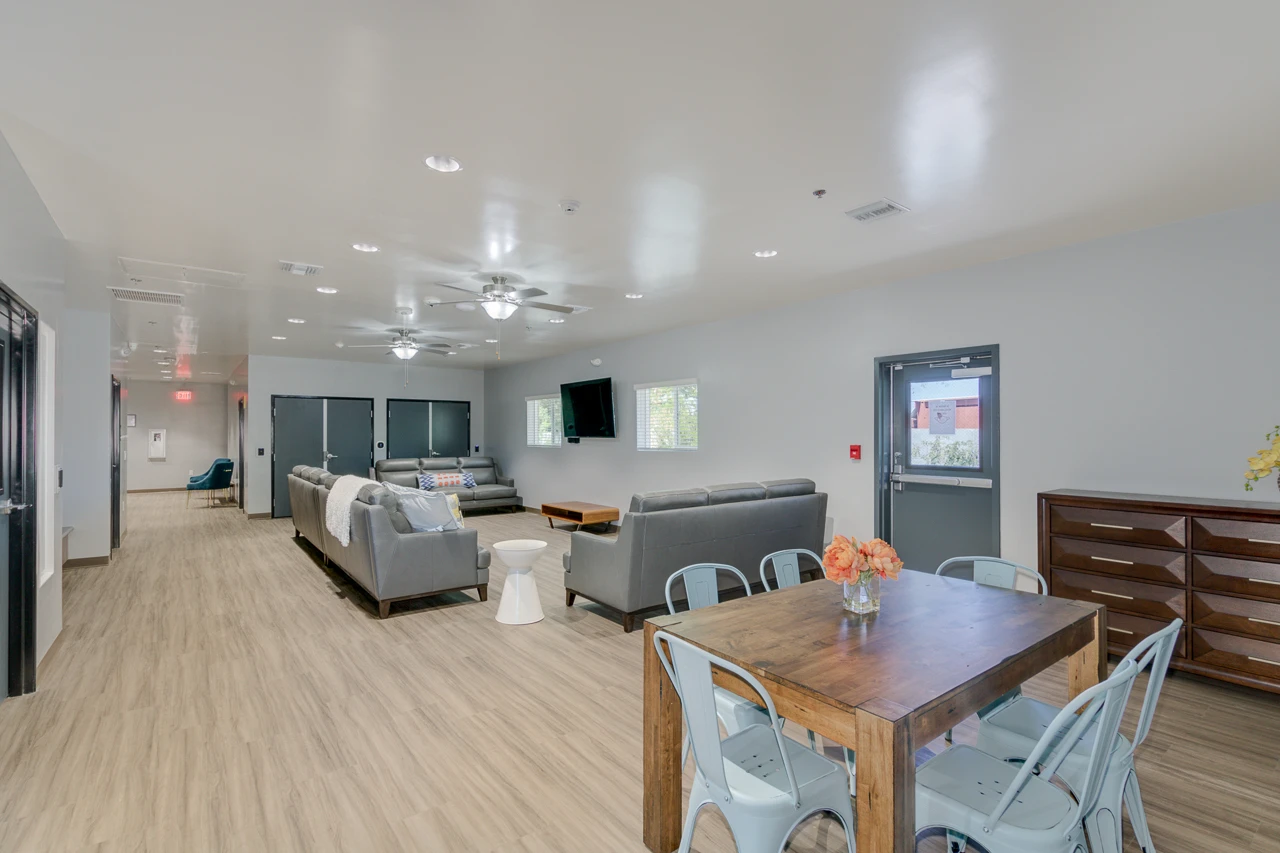
A 24-hour staffed home for adults with SMI who need intensive support. Therapy, psychiatric oversight, medication management, and daily living skills come together in a structured residential setting.
Explore Residential Care
Intensive Outpatient treatment for adults with GMH or SMI. Individual counseling, group therapy, psychiatric services, and care coordination provide structured support while members build skills for everyday life.
Explore IOP
A supportive place to live while staying connected to treatment. Daily routines, life-skills support, and help navigating community resources give members room to build toward greater independence.
Explore Community Living
Case management, housing and placement assistance, benefits application support, and connections to community resources. We work with individuals, families, and referring teams to help people get connected to care.
Explore Community ServicesSelect a card to explore. Use the arrows to browse.
Follow the thread. Select a destination to explore.
"We pick up where you left off, with hope, healing, and a healthy lifestyle within reach."
Trinity is a family-owned behavioral health organization. We opened our first residential home in 2012. Today, that work continues through our residential, outpatient, and community services.
of U.S. adults experienced mental illness in 2019 (51.5 million people).
experienced serious mental illness (13.1 million people).
experienced co-occurring substance use & mental illness (9.5 million).
Reach out today; admissions will walk you through every step, gently.
We meet people at every stage, from the hardest moment to the most independent one, and every step in between.

People come to Trinity from hospitals, unstable housing, periods of crisis, and supported living. We start with where you are and the support you need next.
A place to continue care, with daily structure and support.
Help connecting with housing, treatment, and community resources.

Ongoing care and support as you work toward stability.
Support for daily routines and the next stage of independent living.
You don’t have to have it all figured out to begin.
Talk through your next step ↗
Dramatic shifts in mood, energy, and the ability to get through a normal day.
Some stretches you feel unstoppable. Barely sleeping, big plans, moving fast. Then it drops, and getting out of bed feels like too much. It's real, it's chemical, and it steadies with the right support around you.
Constant, exaggerated worry about everyday life, sometimes with sudden panic.
Your mind won't stop running worst-case scenarios, even when you know better. It's exhausting to carry all day, every day. It gets quieter when you're not facing it alone.
Traumatic events that keep affecting you long after they’re over.
Something that happened long ago still shows up uninvited. You stay on guard even when you're safe. It's not weakness. It's a real injury, and it can heal.
When it gets hard to tell what’s real, and the mind and senses stop agreeing.
Hearing or seeing things others don't, or feeling like the world rearranged itself. It's isolating and heavy to carry alone. With steady treatment, the noise gets quieter and life gets livable again.
The reality shifts of schizophrenia alongside serious mood changes.
It carries the reality shifts of schizophrenia, tangled with deep highs or lows in mood. It's a lot to hold, and it responds to steady treatment that addresses both sides.
Intense, fast-moving emotions and an unstable sense of who you are.
Feelings hit hard and fast and can flip in an afternoon. Underneath is often a shaky sense of who you even are. It's not you being too much. It responds to the right kind of steady support.
A heaviness that doesn’t lift, and days that all start to feel the same.
It's not just sadness. It's a heaviness that makes ordinary things feel impossible. You don't have to push through it alone, and it does lift with help.
Hover or select a number to explore. Read at your own pace.
These are some of the most common, not the whole list. If you don’t see yours here, reach out anyway.
Recovery rarely moves in a straight line. Some seasons call for round-the-clock support. Others call for a place to live while you rebuild. We help coordinate the next step as your needs change. Housing support and treatment are separate services.
A staffed home when you need structure and support around the clock.
Help finding a place to live as you build toward independence. Housing is not conditioned on attending Trinity’s IOP.
Your own footing, with connection and support still within reach.
And if you’re not connected to care at all yet, that’s where our Community Services come in, helping you get coverage, a determination, and a way in.
You’re a person in a season of your life. That’s who we treat, and that’s who we help move forward.
Three programs, one path you can move through.
Around-the-clock support in a warm, home-like residence, where daily structure, clinical care, and community come together.
For adults 18 and older with a serious mental illness (SMI) designation, including those who need personal-care support.
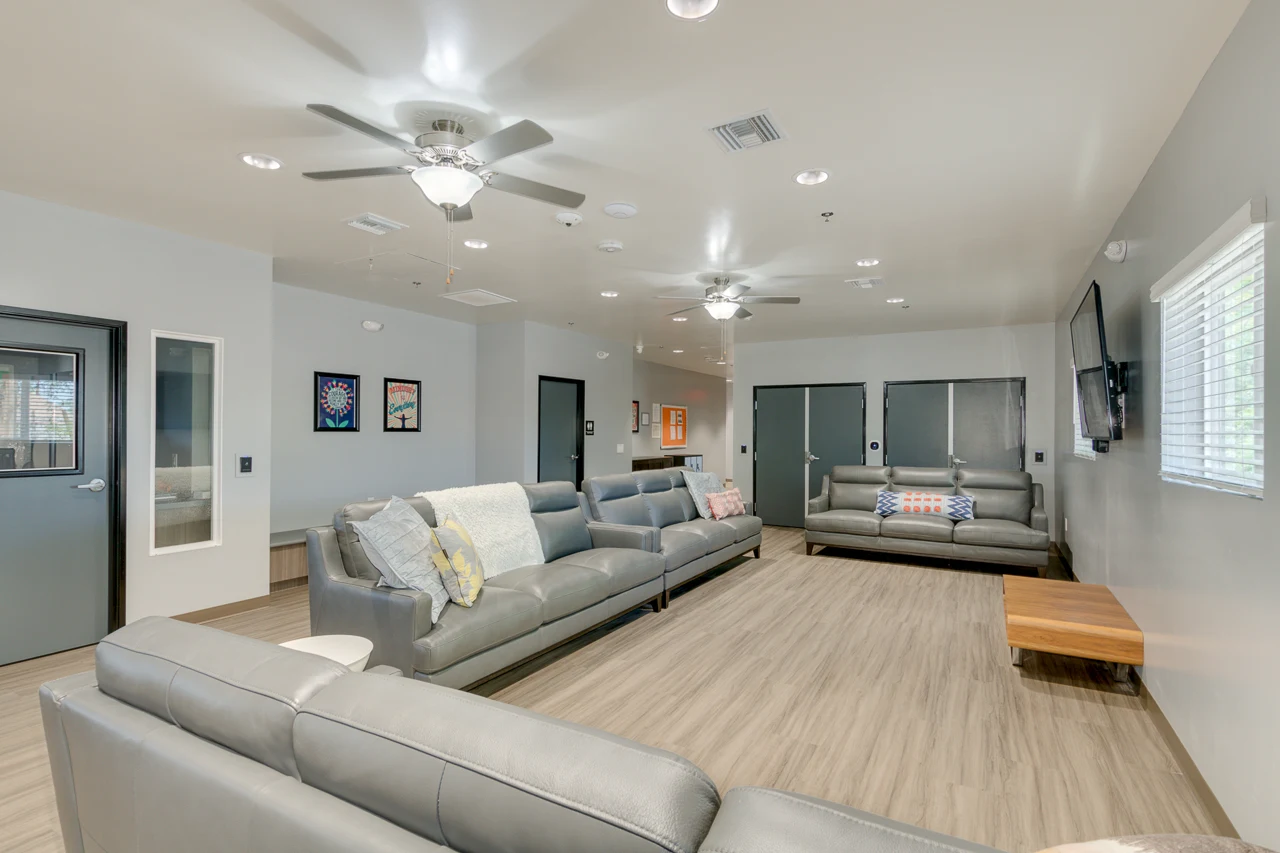
Members take an active part in their care plan and stay engaged with provider recommendations.
Cell phones are not permitted, helping protect everyone’s privacy and keep the focus on care.
Who qualifies
Who qualifies
Who qualifies
Is this the right level
Is this the right level
A confirmed serious mental illness (SMI) designation is required for our residential program. Referrals can come through a health plan, hospital, or case manager.
Send the history and physical (H&P), psychiatric assessment, and treatment plan. Our admissions team will coordinate secure document submission.
Most referral requests are answered the same business day, and no later than 24 hours. We do not accept intakes on Fridays.
Following screening, we coordinate placement for members whose needs fit our residential program.
A clear next step. A team you can reach.
Connect with admissions ↗Intensive outpatient care for adults 18 and older with general mental health (GMH) needs or a serious mental illness (SMI) designation. Therapy, psychiatric services, and practical support come together in a consistent weekly program.



DES assistance is available as needed. Members also receive case management, job-readiness support, and help building independent living skills.
Who qualifies
Who qualifies
Who qualifies
When IOP is the right fit
When IOP is the right fit
Most referral requests are answered the same business day, and no later than 24 hours. We do not accept intakes on Fridays.
Reach out to admissions ↗Trinity connects adults with GMH or SMI to housing through our properties and organizations throughout the Valley.
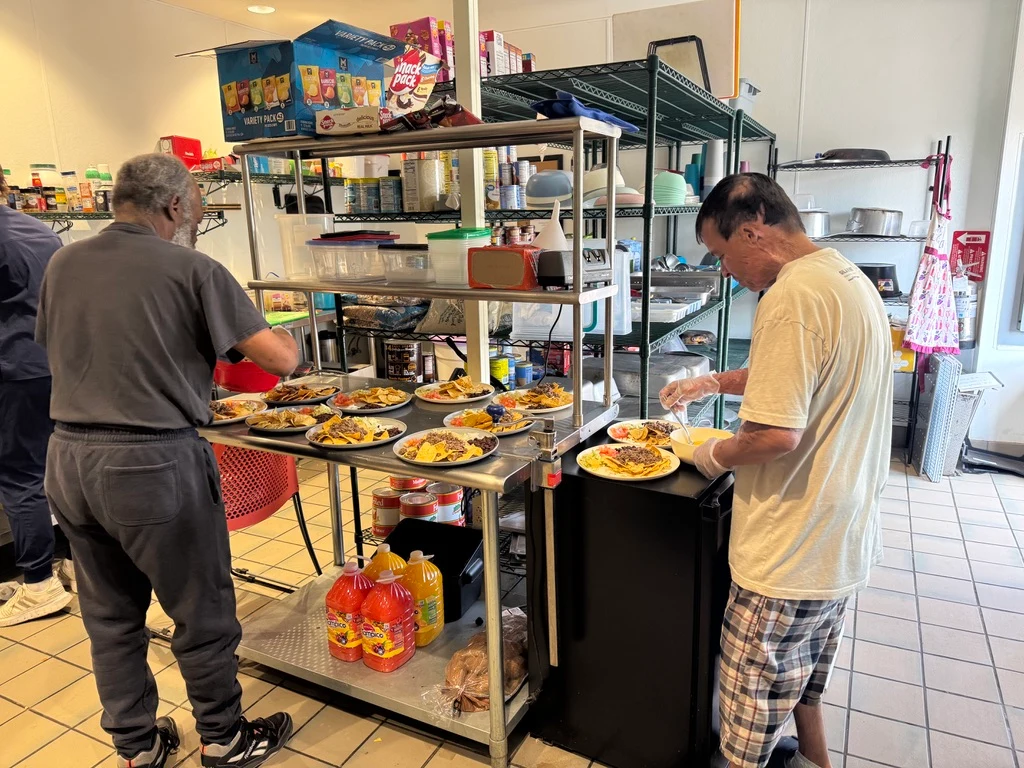
We review eligibility, availability, and your home’s specific rules with you.
The housing fee is waived when a member has no income.
A $300 monthly housing fee applies once income is established.
Alcohol-free and drug-free premises.
No smoking or vaping indoors.
A 30-day blackout period applies to Community Living. Afterward, curfew is 8:00 PM unless approved in advance.
Approved visitors only; no overnight visitors or pets. Respect fellow residents and shared spaces.
Need help getting connected?
Benefits assistance ↗Case management & resources ↗These aren’t separate silos. As things change, someone can move between levels without leaving the same team or starting over with strangers.
For those not yet in a program, Community Services helps people get connected to care in the first place.
For admissions, referrals, or community services, contact Trinity.
We accept Mercy Care, Blue Cross Blue Shield, and United Healthcare.
Admissions can help confirm coverage and program eligibility.
Call admissions to discuss a referral. You can start the conversation even if member information or supporting documents are incomplete.
Most referral requests are answered the same business day, and no later than 24 hours. We do not accept intakes on Fridays.
Online referrals and document uploads are currently unavailable. Call us to make a referral and arrange how to send supporting documents.
Call (602) 882-2350 ↗Call or text 988 for the Suicide & Crisis Lifeline, available 24/7.
Call 988 ↗Housing, access to treatment, and reliable support all affect a person’s ability to maintain their health. Trinity’s community services address these needs through case management, placement assistance, outreach, and benefits application support.
We work with individuals, families, and care teams to identify priorities, coordinate services, and address the barriers that can keep people from receiving care.

Managing appointments, referrals, and services across different providers can become overwhelming. Our case management support brings these pieces together.
We help identify needs, connect individuals with appropriate resources, and coordinate with the people involved in their care. Follow-through matters, particularly when someone is changing programs, returning to the community, or struggling to stay connected to treatment.
Discuss support options ↗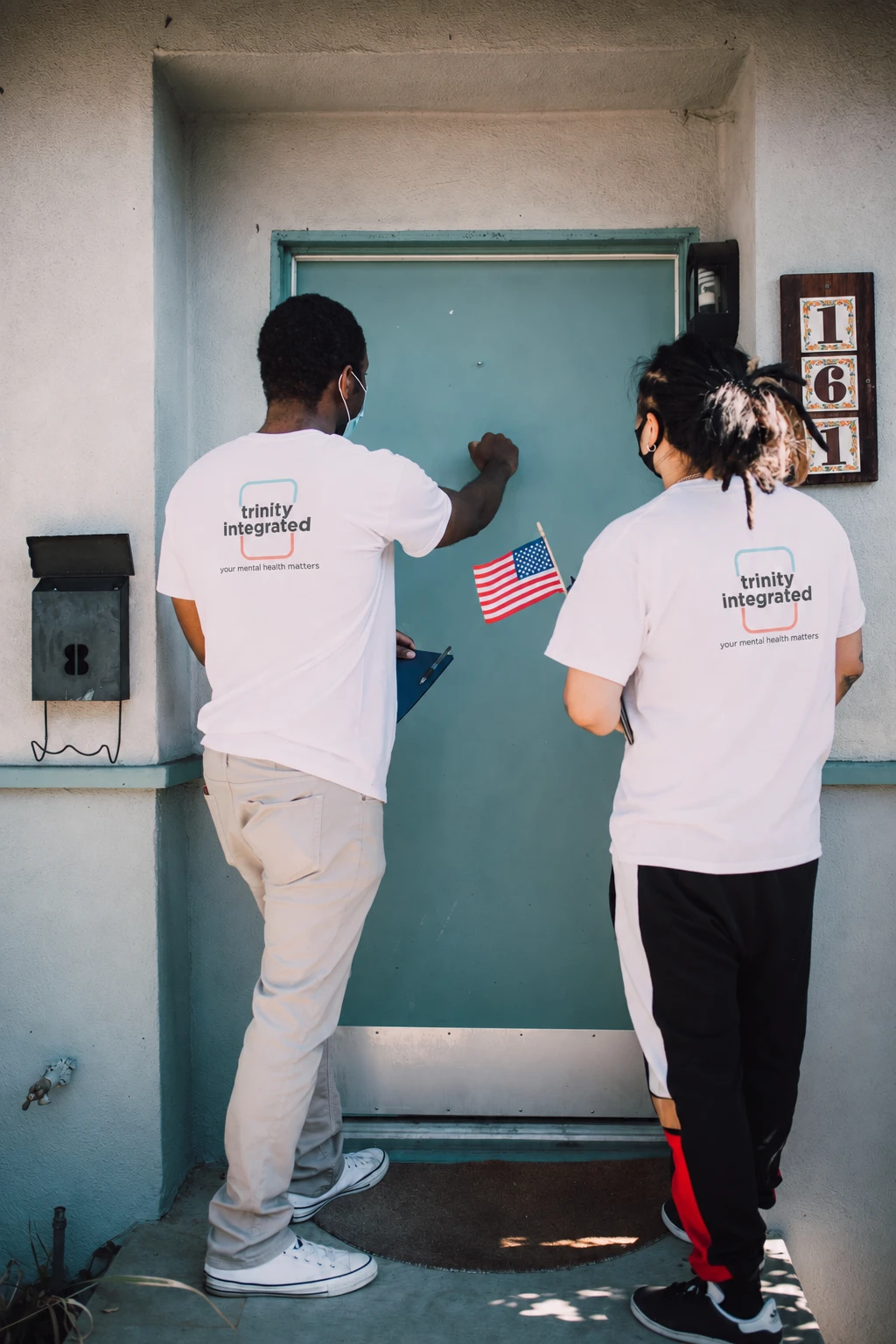
A successful placement considers a person’s care needs, daily living abilities, and circumstances.
Trinity assists with identifying housing and care options, coordinating referrals, and navigating placement requirements. We work with individuals and referring teams to clarify what support is needed and help coordinate the transition into an appropriate setting.
Placement depends on eligibility, program requirements, and availability.
Community Living: costs & house expectations ↗
Access to services often begins with a conversation. Our community outreach connects individuals and families with information about treatment, housing support, and local resources.
We work with community partners to identify unmet needs, explain available options, and connect people with services relevant to their circumstances.
Discuss support options ↗
Unstable housing can make it difficult to maintain treatment, complete applications, or stay connected with providers. Our homeless outreach focuses on helping individuals access care and resources while addressing these immediate barriers.
Support may include connections to behavioral health services, housing and placement assistance, benefits application support, and coordination with community organizations. Each person’s priorities and readiness guide the next steps.
Discuss support options ↗
Trinity participates in Arizona’s Community Partner–Assistor Organization program. The program enables trained staff at participating organizations to assist with public benefits applications through Health-e-Arizona Plus, Arizona’s online application system.
Through this role, we provide assistance with SNAP, Arizona’s Nutrition Assistance program, which helps eligible households purchase food. Our support includes completing applications, identifying and submitting required documents, and following application progress.
Eligibility and benefit decisions are made by the administering state agency.
Discuss support options ↗Whether you are seeking support for yourself, assisting a family member, or coordinating a referral, contact Trinity to discuss the situation and available services.